Can You Fly If Your Driver’s License or ID Card Was Lost or Stolen?
BY Beth Williams
The short answer to “Can You Fly If Your Driver’s License or ID Card Was Lost or Stolen” is yes, but read on.
It’s a panic moment, you’re leaving for the airport and you can’t find a government photo ID like a driver’s license, passport, or military ID. It is lost or stolen. The good news is that if you’re 18 years of age or older you are not automatically denied boarding if you cannot provide proper identification.
Checking ID to Fly at the Airport
Domestic Travel Without an ID
You may still fly on US domestic flights, provided that you go through additional identity and security screening at the TSA security checkpoint. So the bottom line is yes, you can fly domestically without a driver’s license, or other government-issued photo ID if either was lost or stolen. But there are requirements so read on, to fully understand what is needed.
There are two scenarios here; first, you’re about to leave home and you can’t find your photo ID, like a driver’s license, and another you’re on your way home. The TSA recognizes that if your ID was lost or stolen while you were away from home that you would have no way of getting a replacement ID until you are back home, so they will do their best to verify your identity to let you fly.
If You Must Fly Without ID, Do The Following
1. Plan on getting to the airport significantly earlier than you normally would because the additional screening will take longer. Two hours earlier is suggested. 2. Bring as many other photo IDs and forms of ID you have from the list below. 3. If checking luggage you must do so inside the airport at the check-in counter, a skycap won’t be able to help you curbside.
4. Ask for a TSA supervisor to explain your situation.
5. Print out your boarding pass before you get to the airport.
Here’s Some Background Information
All passengers over the age of 18 must present a government-issued form of photo identification at check-in.Acceptable forms of ID are military ID, driver’s license, passport, or passport card at the time of check-in. Yes, you can use your passport to travel domestically. It’s best to call your airline and speak to a customer service representative about its specific policies. Have them make a note in your record regarding your circumstance. Keep in mind that some carriers may be more lenient than others for domestic travel (however, international travel may necessitate additional forms of identification and immigration documents, such as a passport.) Some airlines including, Southwest Airlines and United insist that all passengers must present a government or state-issued photo ID at check-in–no ifs, ands, or buts. But other carriers are a bit more flexible.
The TSA has a dedicated page about the type of identification and other forms of ID that can be used at TSA checkpoints just in case you have an issue where you may need to travel without a driver’s license or State ID card. The TSA web page – What types of ID can be used at TSA checkpoints is a useful tool. Make sure you read the last paragraph which, describes the other forms of ID valid at TSA checkpoints.
Answer. Adult passengers, 18 plus, must show a valid U.S. Federal or State-issued photo ID that contains a name, date of birth, gender, expiration date, and a tamper-resistant feature. If you lose your primary ID, or it has expired, the TSA may accept another form of ID to help confirm your identity. The list below shows some of the forms you can use to help verify your identity. For more information, see this CBS report and related video on the subject.
Finally, this is a partial list of items you can use to help get through TSA screening if your ID is lost. Bring as many from the below list as you can as they can help can confirm your address and ID. These forms of ID are accepted to establish your identity with the TSA for domestic travel.
Expired government photo IDs
Utility bills
Prescriptions
Library card (as a TSA spokesperson is quoted as saying as some have photos)
Costco membership card (while not government-issued they do have a photo)
Work security badges (especially if it has a photo)
Smartphone photos of IDs (keep a photo of your driver’s license on your phone)
Police reports of a lost/stolen wallet or passport
If you’re traveling on an international flight, you must have a valid passport. It is the only accepted form of government ID that airlines and airport authorities accept. There is no way around it. If you lose your passport while traveling you’ll need to get a replacement from a US embassy before returning home. Before departing on your international trip make sure your passport is valid for six months beyond your return date. The passport card can be only used for entering the United States at land border crossings and seaports of entry from Canada, Mexico, the Caribbean, and Bermuda.
Q. If I Lose My ID During Travel, What Secondary Forms of ID Will Be Accepted?
Answer. Traveling domestically without ID is easier than internationally. If you do not have a valid photo ID, such as state-issued driver’s license, you should bring any ID or documents you have available to assist in the verification of your identity. Passengers need at least two alternate forms of identification, such as a social security card, birth certificate, marriage license, or credit card. The documents must bear the name of the passenger. Also, one of these documents must bear identification information containing one of the following: date of birth, gender, address, or photo. If the TSA can confirm your identity, they will allow you to go through security screening and you’ll get a boarding pass with an official note explaining that you don’t have ID, that way you can board the plane. For more information, please review the TSA ID Requirements for Airport Checkpoints
How The TSA Confirms Your Identity
The TSA can confirm your identity, using publicly available databases, so there’s a good chance you’ll be allowed on your flight. This process takes time so we recommend you arrive at least two hours ahead of your departure time.
You’ll need to complete an identity verification process with a TSA officer. The TSA officer will ask for info including your name, current address, and other personal details that can be used to confirm that you are who you say you are. The process could take a while.
If you are a victim of a crime or lose your identification while traveling, go immediately to the local law enforcement station and file a report! Most of the time, you will be allowed to travel if you have gone to your local law enforcement station and filed a report. Bring a copy of the report with you to the airport to show both the airport and TSA check-in personnel. Showing a police report will help you support why you do not have your valid identification.
However, even if you don’t have one, the Transportation Security Administration can verify your identity in other ways besides a driver’s license. If possible, try to obtain an old expired identification card or some other type of identification card that has your picture on it and may be verified. Remember, government-issued IDs that are expired are not valid but may help prove your identity. This is where having a copy of your license on your phone can also help.
Before You Travel – Have a Contingency Plan in Case Your ID is Lost or Stolen While Traveling
1. Have ID numbers and photos of IDs and anything else of value in your wallet like credit cards on your phone. Make sure your phone is passcode protected. 2. You may be able to travel with copies of your license and passport. Keep them secure but where you can retrieve them like hidden in emails sent to yourself, or in your photos on your phone. Make sure your phone is password-protected. If you’re not cell phone savvy, make sure a trusted family member or friend has access to a copy and can email or text it in the event of an emergency to you or the authorities.
3. Keep copies of your valid IDs in two places. The first is in a safe place at home and the second location is to have a set to take with you. Keep the copies securely in your carry-on luggage, so you always have access to them. If you place the copies of your IDs in your luggage to be checked and then proceed to the TSA checkpoint only to discover your IDs are missing the copies in your checked luggage will do you no good since the luggage has been already turned over to the airline. Therefore keep everything of value in your carry-on luggage so you have access at all times in addition to the photos of your passport and driver’s license on your phone.
Join a Trusted Traveler Program
What is a trusted traveler program?
There are two trusted traveler programs, TSA pre-check, and global entry. Both programs are managed by the Department of Homeland Security. Joining these programs allows you to go through the TSA precheck line which expedites you through security screening domestically You will be assigned a TSA precheck number. Global entry facilitates your arrival through customs. You must apply for both programs and be approved for membership after a background check.
For global entry, you will receive a membership card with your photo on it. This card is another great source of ID as the Customs and Border Program has issued it and can access data on you should you lose other ID such as your passport. Get one of these cards if you plan on traveling internationally. Keep a photo of both sides of the card separate from the card. The matching of a photo of your face to the one in the CBP database might just clear you through to get you back home, even without a passport.
Final Thought on Preparing to Fly Without an ID
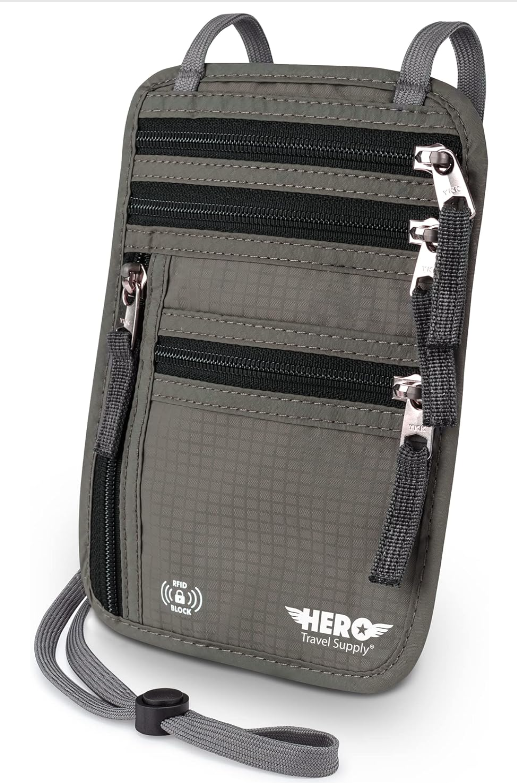
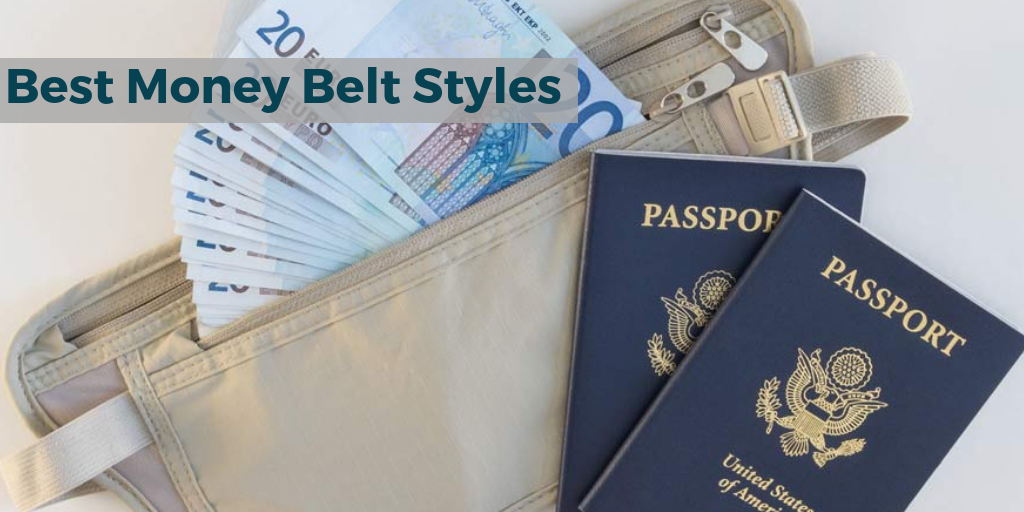
Print out your airline boarding passes from home or the hotel kiosk before arriving at the airport, in case you can’t do it at the airport. While you wouldn’t be able to use them ultimately, they may be somewhat helpful in proving your identity. Also, use an Anti-Theft Document Organizer to minimize the loss or theft of your valuables while traveling. We like travel wallets that attach to your clothing, or hidden waist wallets to keep ID’s, money, and credit cards close to your body making them harder to lose and harder for pickpockets to steal.
As mentioned plan on extra time in screening while using any of the above documents to travel with. TSA has the prerogative to deny airport entry with any of these documents. However, TSA officials understand that you can lose your wallet or have it stolen and will do their best to work with you.
Anti-Theft Travel Accessories to Help Keep Your ID on Your Body
Additional Articles You May Like
Can You Fly If Your Driver’s License or ID Card Was Lost or Stolen? was last modified: December 29th, 2023 by Beth Williams